A booth can look polished and still fail the people working inside it. Freeman's 2025 commercial research found 93% of attendees consider staff who can answer their questions very or extremely important, but only 78% rated exhibitors very or extremely effective at delivering that capability (Freeman, 2025). A good trade show booth design brief closes that gap before anyone starts rendering walls.
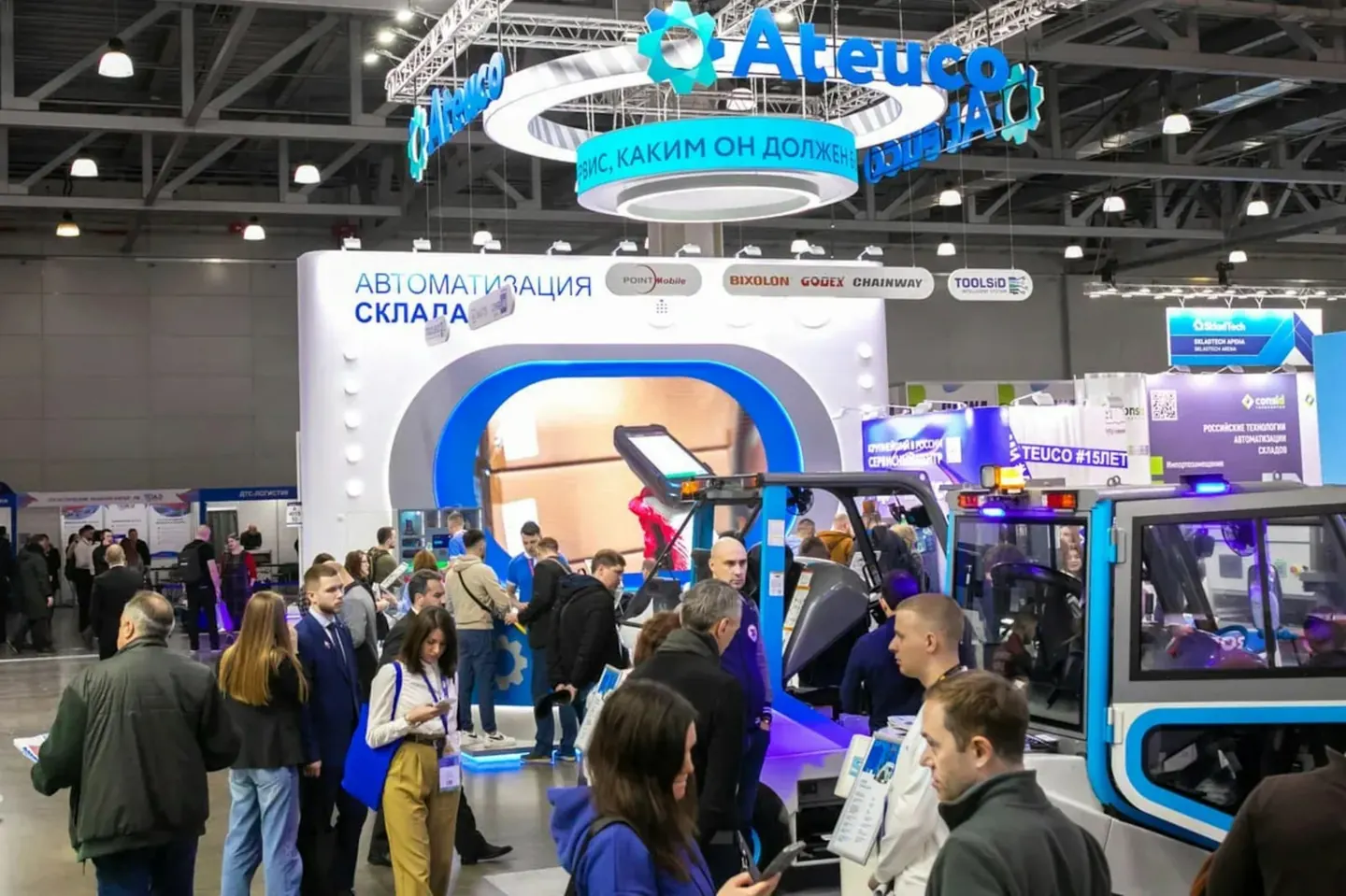
The brief should define who the booth is for, what they need to understand or do, and how the space supports staff, demonstrations, meetings, and follow-up. It is the operating document between marketing, sales, product, designers, builders, and on-site representatives.
Start with the audience and business outcome
Name one primary objective and one secondary objective. Examples include qualified product conversations, partner meetings, launch demonstrations, customer expansion, recruiting, or brand introduction. “Drive traffic” is not an outcome unless the team also defines whose traffic and what should happen next.
Describe the priority visitor in operational terms:
- industries, company sizes, markets, and named accounts
- buying roles, technical roles, partners, media, or investors
- the problem each group is trying to solve
- what they should understand within five seconds
- the conversation, demonstration, or meeting that should follow
Design requirements change with the event. Scryon maps 2,602 companies for CES 2027, where product discovery, media, investors, and technology buyers create competing visitor paths. EURONAVAL 2026, November 3–6 in Paris, maps 717 companies around defence procurement, technical evaluation, and partnerships. SEMICON West 2026, held October 13–15 in San Francisco, maps 867 companies across semiconductor manufacturing and electronics. The same visual concept cannot serve all three without a different message hierarchy, demonstration plan, and staffing handoff.
Use the broader trade show marketing strategy to settle the event objective and target audience before turning them into spatial requirements.
Document the non-negotiable constraints
Put verified constraints in the brief, with a source and owner for each one. Do not make the design team reconstruct them from emails.
| Constraint | What to record |
|---|---|
| Space | Exact footprint, open sides, orientation, columns, and neighboring structures |
| Rules | Height, setback, hanging-sign, fire, accessibility, sound, lighting, and demonstration limits |
| Services | Power, internet, rigging, water, compressed air, cleaning, security, and storage |
| Operations | Freight route, installation and dismantling windows, labor rules, and material-handling plan |
| Budget | Design, production, rental, graphics, AV, freight, labor, venue services, and contingency |
| Schedule | Concept, approval, artwork, production, organizer review, shipping, install, and rehearsal deadlines |
Attach the current floor plan, exhibitor manual, contract, brand standards, booth assignment, and organizer contacts. If a rule is unresolved, label it as an open decision with a due date rather than letting a designer assume.
Convert the brand into a message hierarchy
Write the content before choosing surfaces. The brief should contain:
- One primary promise: the idea a relevant passerby should grasp quickly
- Three proof points: evidence, capabilities, customer-approved results, or demonstrations that support it
- One next action: watch, try, compare, meet, scan, or schedule
- Approved language: product names, claims, disclaimers, logos, colors, photography, and prohibited wording
Freeman and Harris Poll research found 95% of attendees trusted brands more after an in-person event, while 87% visited the brand's website and wanted to engage online afterward (Freeman Trust Report, 2025). Carry the same promise and visual system through the pre-event PR and brand plan, booth, landing page, sales materials, and follow-up.
Design zones around visitor and staff actions
Translate the journey into functional zones rather than a list of furniture:
- Recognition: name, category, and primary promise visible from the likely approach
- Welcome: an open entry and an easy way for a representative to begin a relevant conversation
- Demonstration: sightlines, sound control, power, connectivity, product handling, and a fallback if technology fails
- Qualification: space to ask questions without blocking the aisle or demo
- Meeting: the privacy level, seating, acoustics, and duration required for planned conversations
- Storage and staff support: collateral, personal items, charging, water, cleaning supplies, and lead-capture equipment out of sight
- Accessibility: circulation, reach, seating, captions, contrast, and alternative ways to experience the content
Freeman's 2025 report found only 65% of exhibitors believed organizer program and hall design helped them achieve commercial objectives, while 49% said organizers helped guide attendees to their booth based on attendee needs (Freeman Commercial Trends Report, 2025). Your brief should therefore explain how the booth itself signals relevance and makes the next action obvious.
Build the representative handoff into the brief
The design is incomplete until staff can operate it. State who will welcome, qualify, demonstrate, handle technical questions, host meetings, capture notes, and manage escalation. Map each role to a zone and confirm that the layout supports shift changes, accessibility, device charging, storage, and handoffs.
Include the five questions representatives should be ready to answer, the qualification fields to capture, the demonstration sequence, and the next-step options available. Schedule a rehearsal using the final message, demo, lead form, and floor layout. This keeps the creative concept aligned with the team that must turn it into conversations.
Specify deliverables, approvals, and measurement
List every expected output: floor plan, elevations, rendered views, production artwork, material and finish schedule, AV specification, lighting plan, furniture list, service orders, installation drawings, risk register, and on-site contact sheet. Name the approver and due date for each.
Measure against the original objective. Useful metrics may include qualified conversations, target-account meetings, completed demos, requested follow-ups, meeting progression, content engagement, and operational failures. Separate booth performance from broader event pipeline and brand measurement.
Scryon's free product supports conference discovery and ICP scoring, while paid credits support deeper event and company research. Separately scoped enterprise conference services can coordinate booth design with conference booking, marketing preparation, target-account research, representative staffing, CRM integration, and measurement. Scope and pricing are agreed through the enterprise plan; design work cannot guarantee meetings, coverage, savings, or ROI.
Further reading
- Freeman Commercial Trends Report 2025 – exhibitor outcomes, attendee expectations, staff effectiveness, and hands-on interaction
- 2025 Freeman Trust Report – research on how live events influence brand trust and post-event engagement
- Design Puts Intelligent Innovation to Work – practical design principles for reducing friction and supporting conversations
Frequently asked questions
Include the event and audience, business objective, priority conversations, brand message, proof points, booth dimensions, organizer rules, functional zones, demo requirements, accessibility needs, staffing plan, deliverables, budget, deadlines, approvals, and measurement plan.
The event owner, brand or creative owner, sales lead, product demo owner, operations lead, and budget owner should approve the brief. Legal, security, accessibility, and venue reviewers may also be needed depending on the build and demonstration.
Begin after participation and space are confirmed, but early enough to meet organizer approval, production, freight, installation, and content deadlines. Work backward from the earliest fixed deadline, not only from opening day.