Trade show marketing is how B2B teams turn floor time into pipeline: choose the right shows, promote before doors open, run a disciplined on-site motion, follow up fast, and prove ROI to finance. A booth is a channel. The marketing system around it is what separates a memorable week from a measurable quarter.
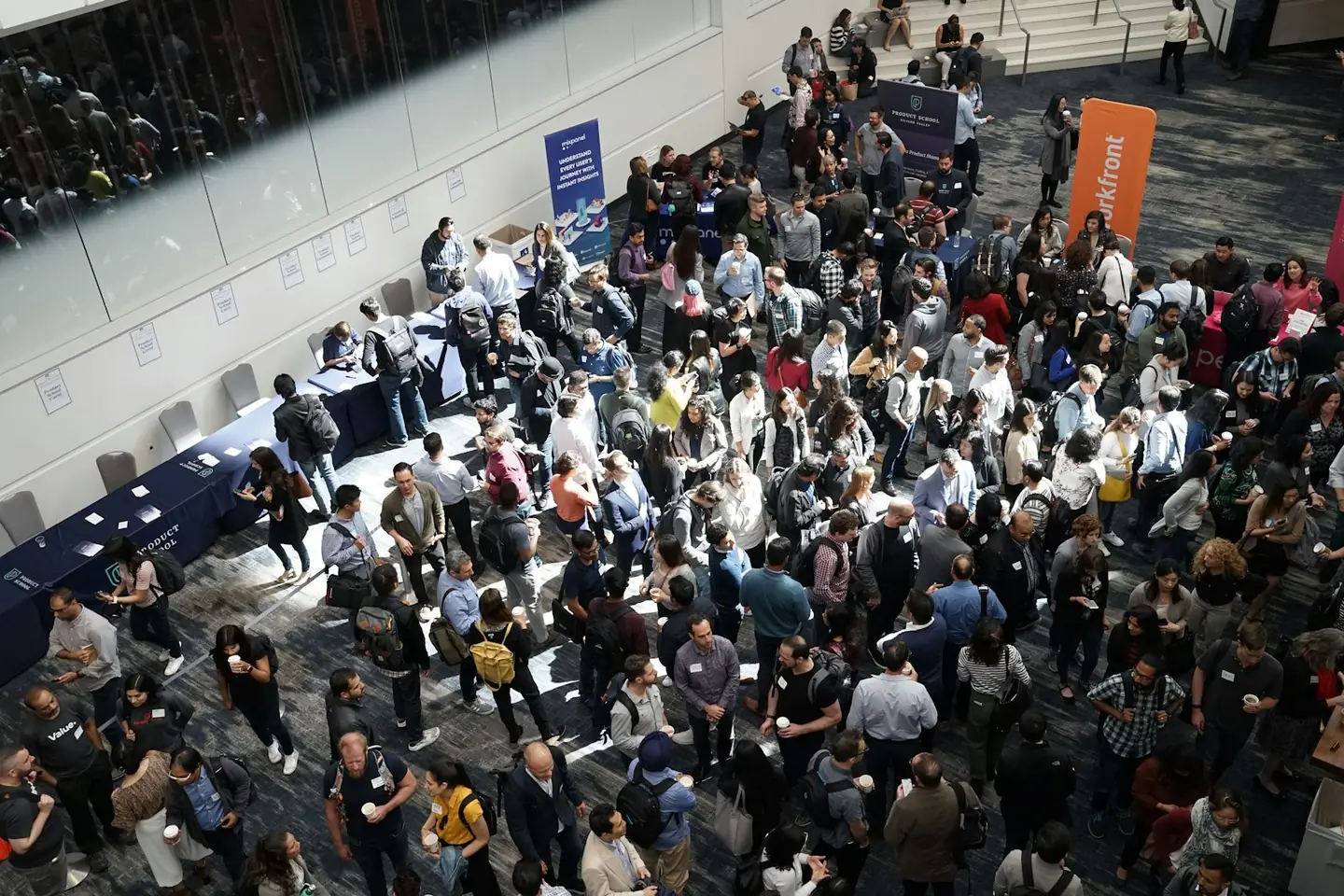
Research compiled by Vendelux found that pre-event planning determines 76% of attendee agendas. If your trade show marketing starts when the carpet is laid, you are already competing for the leftover attention.
Trade show marketing strategy
A usable strategy answers five questions before anyone books travel:
- Outcome. Pipeline sourced, meetings with named accounts, or expansion – pick one primary goal per show.
- Audience fit. Is your ICP dense enough to justify all-in cost? Score events before you sponsor them.
- Motion. Full booth, meeting suite, walking the floor, or a side event – booth vs walking the floor should be an explicit choice, not a default.
- Pre-show engine. Target list, sequences, and booked meetings 4–6 weeks out.
- Measurement. CRM fields, campaign tags, and a 90/180-day report owner.
Build the annual calendar as a portfolio, not a wish list. Event budget planning covers tiering (flagship vs mid-tier vs attendance-only) and the cost-per-key-event math finance will ask for. For the demand-gen operating view, pair this guide with Scryon for marketing.
Trade show lead generation
Trade show lead generation is not badge volume. It is ICP-fit conversations with a next step, captured in CRM within 24 hours. Pair pre-show booked meetings with disciplined on-site notes; route badge-only scans to nurture. For the full capture and sequence playbook, see trade show lead follow-up and event lead capture.
Trade show marketing ideas (beyond the booth)
Trade show marketing ideas that move pipeline without reinventing creative every year:
- Tiered outreach 6–8 weeks out (named AE asks for tier-1; SDR sequences for tier-2)
- Customer / partner dinner or breakfast for accounts already attending
- Side-event or suite meetings for deals that need quiet rooms
- Competitive intel capture (who sponsors, who staffs) fed into CRM notes
- Same-day personalized follow-up templates keyed to conversation notes
Promotion is the work that puts you on attendees' pre-planned booth lists – not the creative that looks good on Instagram after the fact.
Pre-show (highest leverage)
- Personalized outreach to ICP accounts known to be attending, with a specific meeting ask
- Customer and partner invites to a dinner, roundtable, or demo slot
- LinkedIn and email content that names the show and a concrete reason to stop by
- Sales and marketing aligned on tiered target lists so sequences do not collide
On-site
- Clear booth story (problem → proof → next step) instead of a feature wall
- Badge capture that includes notes and next-step ownership, not scans alone
- Side conversations for tier-1 accounts away from the aisle noise
Post-show
- Same-day or next-day follow-up referencing the conversation
- Segmented sequences for hot / warm / cold (see trade show lead follow-up)
- Content recap only after the personal touches go out – broadcasts do not replace specificity
Generic "visit us at booth 2147" blasts underperform because they ignore agenda math. Personal, timed, account-specific promotion wins.
Budget: fund execution, not just space
Sponsorship and booth fees are only part of the all-in number. Travel, build, hospitality, enrichment, and follow-up capacity belong in the same model. Underfunding pre- and post-show work is the most common way expensive space produces weak pipeline.
Use the three-tier frame in the annual event budget guide: concentrate most budget on a few flagship shows with full execution, then fund mid-tier and attendance plays where fit is high. A manufacturing floor like FABTECH Canada 2026 (June 9–11, Toronto) can outperform a bigger brand-theater booth when metal fab and automation buyers are your ICP and your meeting calendar is full before doors open.
ROI: measure what finance trusts
Badge scans describe activity. Pipeline and closed-won describe return. How to measure trade show ROI walks through the metrics that hold up in a QBR: ICP-fit meetings, sourced and influenced pipeline, cost per qualified meeting, and ROEI at 180 days.
Industry measurement is still uneven. Bizzabo's 2026 State of Events Benchmark Report found that 40% of organizers still report difficulty proving event ROI – down from 70% in 2025, but still a real gap. Exhibitors face the same problem when CRM hygiene and attribution windows are sloppy. Fix the instrumentation before you argue for a bigger booth.
A simple operating rhythm
| Phase | Owner focus | Output |
|---|---|---|
| 8–6 weeks out | List + enrichment + sequences | Tiered target list, meetings booking |
| Show week | Capture + notes + routing | CRM-ready leads with owners |
| 48 hours after | Personalized follow-up | Hot opps moving; warm in nurture |
| 90 / 180 days | Pipeline and ROEI report | Keep / cut / grow decision for next year |
Trade show marketing compounds when each show feeds the next: better lists, clearer ICP density signals, and a reporting habit finance respects. Treat the calendar as a system – strategy, promotion, budget, and ROI in one loop – and the booth becomes an execution detail instead of the whole plan.
Further reading
- How to Measure Event Marketing ROI in 2026 – Vendelux on pre-event planning share of agendas and ROEI benchmarks
- 2026 Event Marketing Statistics, Trends, and Benchmarks – Bizzabo State of Events data on ROI measurement gaps
- Event Budget Planning: Cost Per Key Event Guide – tiered budget model for B2B event portfolios
Frequently asked questions
Trade show marketing is the full-funnel plan around exhibiting or attending industry shows: event selection, pre-show promotion, booth or floor execution, lead capture, follow-up, and ROI measurement – not just booth creative and swag.
Goals tied to pipeline, a shortlist of ICP-dense shows, pre-event outreach and promotion, a clear booth-vs-floor model, CRM-ready capture, a 24–48 hour follow-up cadence, and 90/180-day attribution.
Track ICP-fit meetings, event-sourced and influenced pipeline, cost per qualified meeting, and ROEI at 180 days – not badge scans alone. See the dedicated guide on measuring trade show ROI.
Concentrate most spend on a few tier-1 shows with full pre- and post-event execution, then fund mid-tier and attendance-only shows where ICP fit is high. Model cost per key event before locking the annual number.