A conference booking checklist begins after event selection, when a promising show must become an approved, contracted, and owned program. This handoff is where teams often lose time: marketing assumes procurement is reviewing terms, sales assumes meetings will be arranged, and the organizer's early-rate or booth-selection deadline passes.
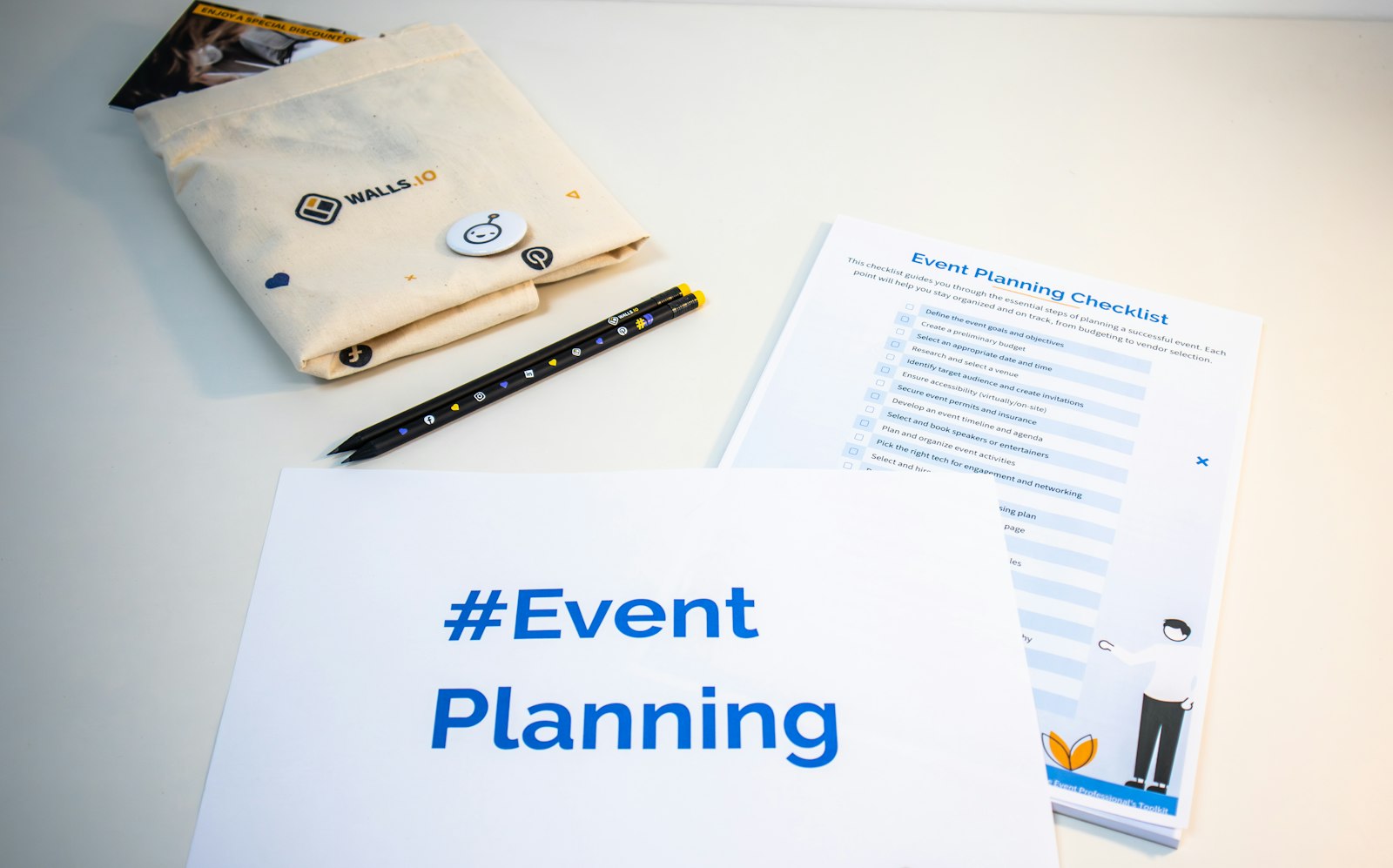
Use this checklist to move from “we should attend” to a clear booking decision. If the shortlist is not settled yet, first use the guide to choosing which conferences to attend or compare options in the event directory.
1. Write the booking brief
Create a one-page brief before contacting the organizer. It should state why the company is considering the event and what a successful participation format must make possible.
- Business goal: pipeline creation, account expansion, partner development, product launch, market entry, recruiting, or brand awareness
- Target audience: industries, named accounts, functions, seniority, geography, and buying roles
- Participation options to evaluate: delegate passes, meetings-only attendance, speaking, sponsorship, standard booth, custom booth, or hosted side event
- Desired outcome: target meetings, qualified conversations, partner introductions, or another measurable result
- Decision deadline: the last date for internal approval before organizer inventory or pricing changes
- Decision owner: one person accountable for go, no-go, or scope reduction
Do not let a booth recommendation stand in for an event strategy. A team attending WHX Dubai 2027, for example, should decide whether its healthcare audience and goals require exhibition space, sponsorship visibility, executive meetings, or a smaller delegate presence before requesting a contract.
2. Compare participation options in writing
Ask the organizer for the current prospectus, floor plan, contract, rules, and exhibitor manual. Put every viable option into one comparison sheet. Record the price, included passes, booth dimensions, furniture, lead-retrieval access, speaking rights, attendee-data terms, marketing inventory, payment schedule, and cancellation conditions.
Clarify what is not included. Space-only pricing can exclude booth construction, flooring, power, internet, material handling, drayage, labor, cleaning, storage, insurance, and badges. Official manuals often attach deadlines to these orders. The 2026 ILTA exhibitor manual, for example, required a valid certificate of insurance by a stated deadline and documented exactly what the space fee included (ILTA exhibitor manual).
Record verbal answers in a follow-up email and require material commitments in the contract or order form.
3. Check deadlines and booth assignment rules
Create one calendar with every organizer and internal deadline:
- Application or space-selection date
- Early-rate expiry
- Contract and deposit due dates
- Cancellation and reduction windows
- Artwork and company-profile deadlines
- Exhibitor badge registration
- Insurance certificate due date
- Freight, utility, internet, and labor orders
- Booth design approval and safety review
- Hotel-block and travel deadlines
Do not assume paying first guarantees the best location. Some organizers use priority points, membership status, historical participation, sponsorship spend, or scheduled selection windows. The American Library Association's 2026 booth process assigns space using priority categories and points (ALA booth assignment process). Ask how assignments work, when your selection occurs, and what happens if preferred spaces are unavailable.
4. Evaluate the booth location
Review the current floor plan with the organizer. A prominent-looking booth can perform poorly if traffic flows elsewhere or nearby construction blocks sightlines.
Check:
- Entrances, session rooms, food areas, lounges, and registration
- Direct competitors and complementary exhibitors
- Columns, walls, ceiling limits, emergency exits, and restricted build zones
- Demo noise, lighting, power, water, and internet requirements
- Storage, meeting space, and staff movement
- Whether the location supports the planned conversations
Ask for alternative locations and confirm any location promise in writing. If the final assignment can change, understand what remedy or substitute applies.
5. Approve the all-in budget
Build the budget around the complete participation plan, not the organizer invoice. Cvent's 2026 planning guide recommends setting the budget early and notes that stakeholders need to agree on it before planning advances (Cvent, 2026).
Include these categories:
- Space, sponsorship, passes, and organizer add-ons
- Booth design, fabrication, graphics, furniture, and AV
- Power, internet, lead capture, cleaning, security, and insurance
- Freight, drayage, storage, installation, dismantling, and labor
- Travel, accommodation, meals, and local transportation
- Pre-event PR, brand campaigns, content, podcast outreach, and meeting outreach
- Booth representatives, training, uniforms, and shift coverage
- Hospitality, side events, customer meetings, and follow-up
- Currency, tax, payment fees, and contingency
Route one approval packet containing the booking brief, comparison sheet, recommended option, all-in estimate, payment schedule, contract risks, and measurement plan. Name the budget owner and the person authorized to sign.
6. Review the contract before signing
Check the legal entity, dates, venue, participation type, booth size and location, included deliverables, payment schedule, cancellation terms, relocation rights, force-majeure language, insurance, data use, brand approvals, and liability.
Confirm who owns any contracted speaking slot, attendee communication, lead data, or hospitality space. Do not rely on the prospectus if the contract says something different. Route privacy, insurance, and unusual liability terms to the appropriate reviewers, and save the signed agreement with every referenced rule or exhibit.
7. Assign preparation owners at booking
The booking is not complete until the execution handoff is accepted. Assign a named owner and due date for:
- Organizer relationship and deadline tracking
- Booth design and vendor coordination
- Pre-event marketing, PR, and podcast outreach
- Target-account research and meeting booking
- Product demos, collateral, and lead capture
- Representative staffing, briefing, and shift plan
- CRM campaign setup, attribution, and follow-up
- On-site escalation and post-event reporting
Schedule the kickoff before the contract disappears into a procurement folder. The team should leave that meeting with a timeline, a risk log, and a single source of truth.
How Scryon supports conference booking
Teams can use Scryon's platform for free conference discovery and ICP scoring, then use paid research credits for deeper event and company intelligence. Those self-serve options are distinct from custom enterprise services.
Through separately scoped enterprise conference services, Scryon can help find and book conferences, discuss booth and sponsorship pricing, coordinate pre-event brand, PR, and podcast preparation, arrange booth design, and provide representatives for booth staffing. Negotiation does not guarantee a saving, and outreach does not guarantee media or podcast placement. Scope and pricing are agreed through the Enterprise plan.
Further reading
- Cvent event planning guide – budgeting, goals, sourcing, and planning workflow
- ALA 2026 booth assignment process – an example of priority-based exhibit-space allocation
- ILTA 2026 exhibitor manual – example requirements, inclusions, and insurance deadlines
Frequently asked questions
Confirm the business goal, audience fit, participation format, total budget, organizer deadlines, booth or sponsorship terms, approval owner, and preparation responsibilities.
Include the space or sponsorship fee plus travel, freight, utilities, labor, insurance, booth design, equipment, connectivity, lead capture, marketing, staffing, hospitality, and contingency.
Yes. Scryon can find suitable conferences and handle participation and booth bookings as a separately scoped enterprise service.