Selling more event sponsorships starts with a better answer to one question: who will the sponsor be able to reach? A logo package describes inventory. Audience data describes commercial relevance. Organizers that can show credible overlap between attendees and a sponsor's target market give buyers something they can defend internally before approving spend.
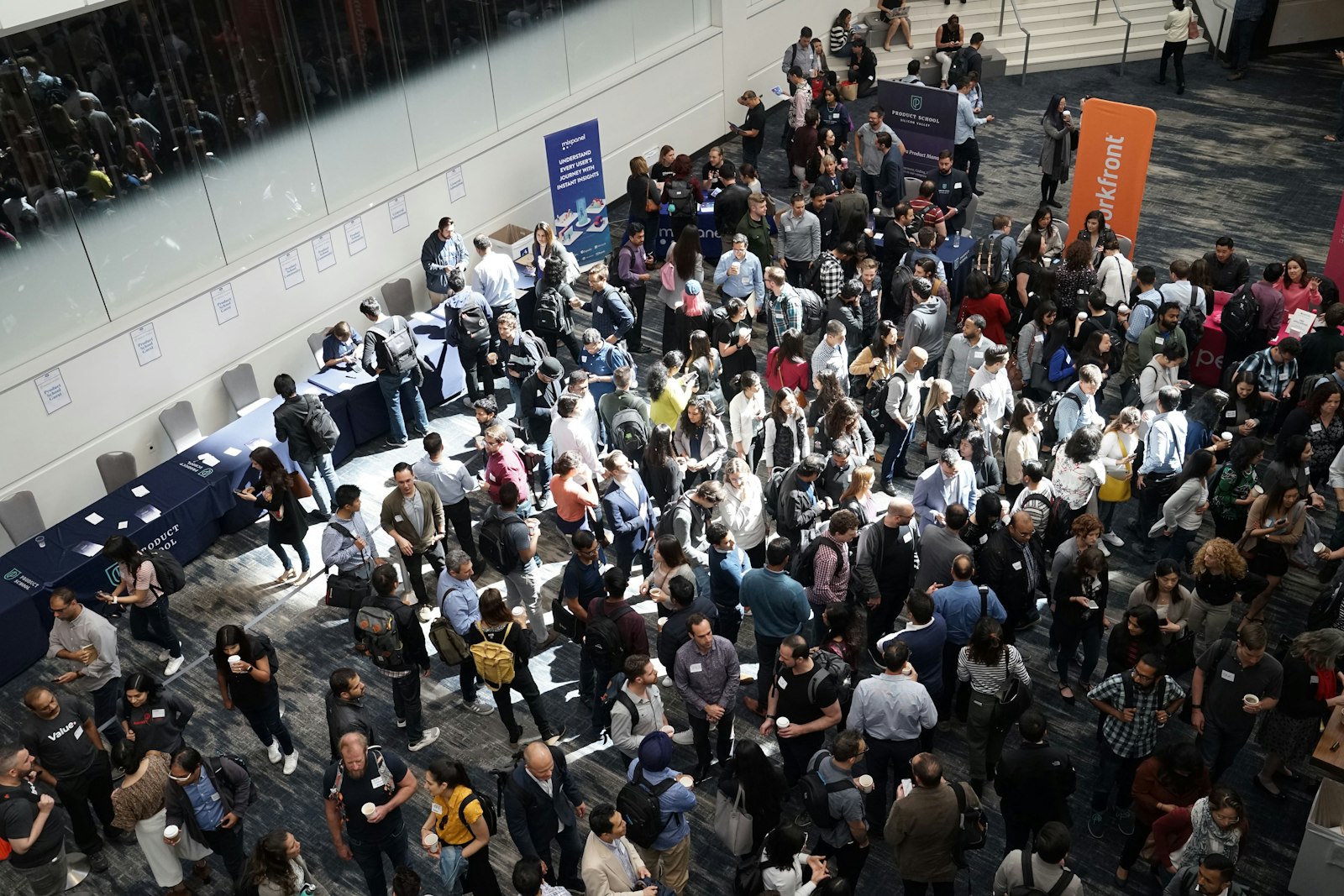
The case for better audience proof is direct. In Freeman's 2025 Commercial Trends Report, the top factor that would make companies more likely to exhibit or sponsor was a summary of attendee types and demographics, selected by 40% of respondents. Understanding attendee objectives and seeing attendee company names also mattered (Freeman, 2025). The strongest pitch therefore moves beyond total registrations and shows why this audience fits this sponsor.
Build an audience-overlap brief
Start with the sponsor's market, not your prospectus. Ask which industries, company sizes, functions, seniority bands, geographies, and buying responsibilities matter. Then compare those criteria with your expected audience and summarize the overlap.
A practical sponsor brief can include:
- The percentage and count of registered companies in the sponsor's target industries
- Role and seniority distribution within those companies
- Named-account overlap, reported at company level where appropriate
- Attendee objectives, such as evaluating vendors, finding partners, hiring, investing, or learning
- Relevant sessions, networking formats, and exhibition zones
- Historical engagement from comparable activations
- Data source, collection date, sample size, and known limitations
Be precise about what the numbers mean. “Thirty percent enterprise buyers” is weak if “buyer” includes anyone at a large company. “Eighty-seven registered directors and VPs in infrastructure, security, and data roles at 54 target companies” is useful because the sponsor can evaluate it.
Match the package to the audience objective
Audience overlap earns attention, but the activation still needs to help the sponsor reach that audience appropriately. Map each asset to a buyer objective instead of bundling inventory by visibility alone.
| Sponsor objective | Better activation options | Evidence to report |
|---|---|---|
| Meet target accounts | Hosted meetings, roundtables, small dinners | Accepted meetings, attendance, account overlap |
| Demonstrate expertise | Sponsored session, workshop, research briefing | Qualified attendance, questions, content engagement |
| Generate product interest | Demo area, guided tour, hands-on lab | Demos completed, scans, requested follow-ups |
| Build category awareness | Stage presence, signage, content, reception | Reach, dwell time, session attendance, recall survey |
| Develop partnerships | Curated introductions, partner forum | Introductions made, follow-up requests, partner progression |
This also prevents a common sales mistake: treating every sponsor as if it wants maximum foot traffic. A fintech platform may value pre-scheduled conversations at Fintech Meetup Europe 2026, while an AI infrastructure company at PyTorch Conference 2026 may prioritize technical practitioners and credible workshop participation. The package should follow the audience and the desired interaction.
Make the proof specific to the event
Generic demographics flatten the reasons people attend. A restaurant finance event should show the mix of operators, lenders, investors, franchise leaders, and development decision-makers relevant to RFDC 2026. A health technology prospectus should distinguish executive, clinical, regulatory, investment, and product audiences at events such as The MedTech Conference 2026.
The same principle applies across regions and specialties. Sponsors assessing WHX Dubai 2027 need a different audience story from sponsors considering ECR 2027. Geography, professional discipline, procurement role, and participation objective matter more than a large undifferentiated badge count.
Use registration questions sparingly to capture the fields that improve matching. Enrich company-level information where permitted, standardize job functions, and separate confirmed registrations from modeled or historical audience data. That discipline makes the pitch more credible and makes post-event reporting easier.
Sell a measurement plan before the event
Sponsors increasingly need evidence that can travel from the event team to marketing and finance leadership. Bizzabo reports that 37% of organizers attribute 40–60% of event revenue to sponsorship, yet its 2025 research also found that 70% of organizers struggled to measure ROI (Bizzabo event benchmarks, Bizzabo ROI research). The gap is an opportunity for organizers who define measurement before the contract is signed.
Add a one-page measurement schedule to the proposal. It should state:
- The sponsor's objective and agreed success measures
- What the organizer will track and how
- What the sponsor must capture in its own CRM
- What attendee consent permits
- When preliminary and final reports will arrive
- Which results can be compared with prior editions
Do not promise pipeline or ROI that the organizer cannot observe. Report delivery and engagement accurately; the sponsor owns its costs, opportunity data, revenue, and final return calculation. For more detail, use the sponsor ROI guide for organizers.
Turn one sale into a renewal system
The post-event report should mirror the original proposal. Show what was delivered, who engaged at an aggregate level, which target accounts participated where consent allows, and how results compare with the agreed measures. Include context for gaps rather than hiding them.
Then hold a renewal conversation while the evidence is still current. Ask which interactions created value, which audience segments were missing, and what the sponsor wants to change next time. Feed those answers into the next package instead of reselling the same tier.
Scryon helps organizers strengthen this process with audience intelligence, exhibitor and attendee research, sponsor matching, and clearer evidence of target-account overlap. Teams can begin with free conference discovery and ICP scoring; deep research uses paid credits. Separately scoped enterprise conference services are designed for exhibiting companies, so organizers should use the organizer offering for sponsor and audience workflows.
Further reading
- Freeman Commercial Trends Report 2025 – exhibitor and sponsor buying factors
- Bizzabo 2025 State of Events – event budgets, attendance, technology, and measurement trends
- Bizzabo guide to sponsorship ROI – aligning sponsor objectives, engagement data, and post-event reporting
Frequently asked questions
Useful sponsor data includes company and role mix, seniority, industry, geography, buying responsibilities, attendee objectives, and verified overlap with the sponsor's target accounts.
Only share data permitted by attendee consent, contracts, and applicable privacy rules. Aggregated audience proof can support a sponsorship pitch without exposing personal contact details.
Agree on success measures before the event, document contracted delivery, and report comparable engagement metrics such as qualified conversations, session participation, scans, meeting requests, and content engagement.