The choice between regional events and flagship events is not about one permanent winner. Flagships create a large market moment; regional events create repeated opportunities with a narrower set of buyers. The right format balances reach, target-account density, meeting depth, and cost for the goal.
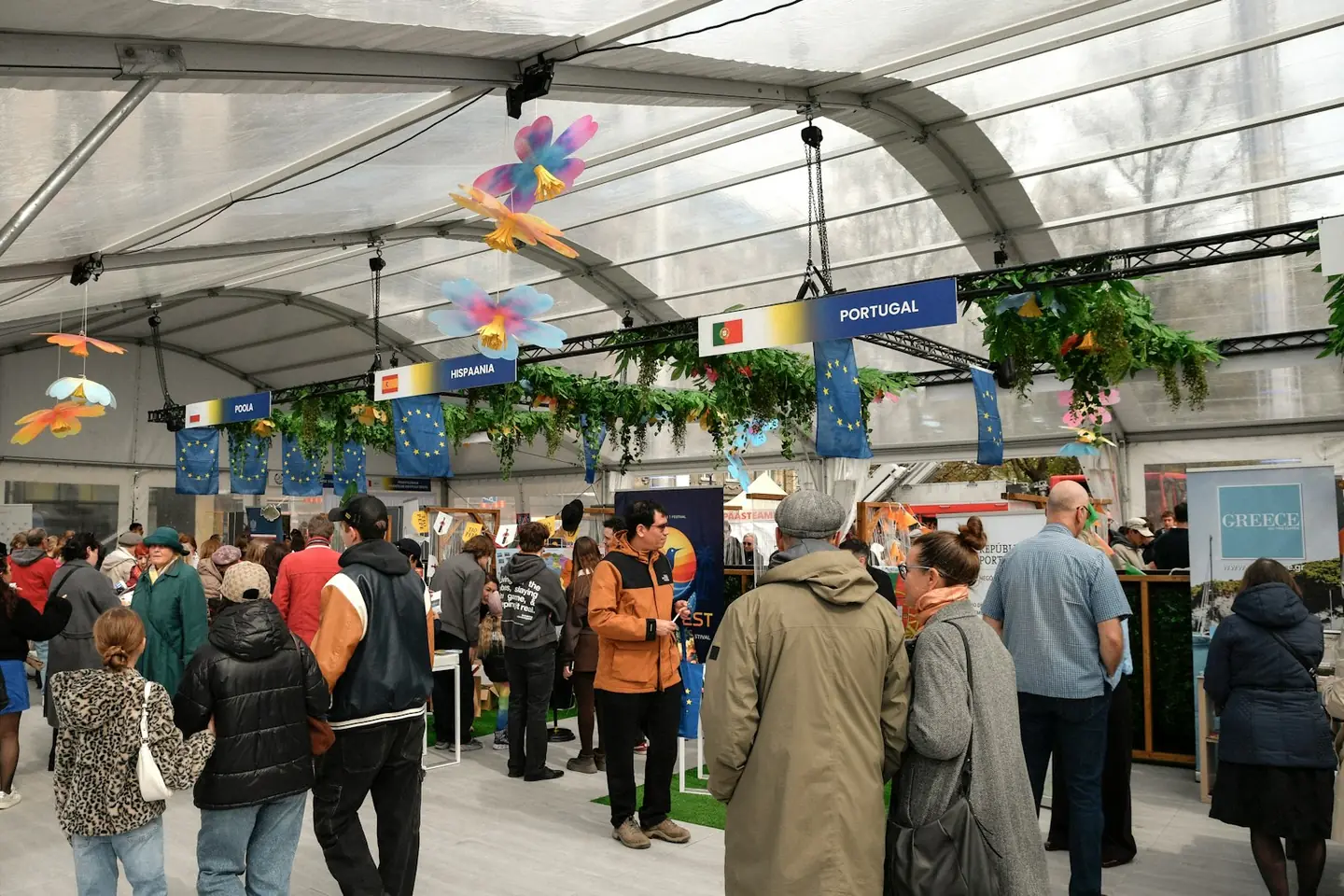
The case for in-person investment remains strong. In its 2025 Outlook on Events, Splash surveyed more than 1,000 US marketers and found that 66% of those running multiple event formats said in-person events generated the most revenue in 2024. But that finding does not tell you to put the entire budget into the biggest show. Format, audience, and commercial objective still determine whether that investment turns into pipeline.
The real winner is the right portfolio
Flagship and regional events perform different jobs. Treating them as interchangeable leads to weak comparisons: a global conference will usually win on total reach, while a focused regional gathering may win on the proportion of attendees your sales team can realistically pursue.
| Decision factor | Regional event | Flagship event |
|---|---|---|
| Audience | Smaller, geographically or vertically focused | Broad, often international and cross-functional |
| Best use | Account progression, local demand, partner activation | Category presence, market discovery, brand reach |
| Meeting style | Longer conversations and repeat interactions | More introductions, shorter windows, heavier competition |
| Cost profile | Lower travel and production burden per activation | Larger sponsorship, staffing, travel, and activation commitment |
| Measurement | Account engagement and opportunity movement | Reach, target-account coverage, meetings, and influenced pipeline |
Bizzabo's 2026 field marketing guide describes the shift as a portfolio strategy: category-leading enterprise programmes run an average of 25 events a year, combining regional roadshows, executive dinners, and account-based experiences with larger conferences.
The scale difference is visible in Scryon's event directory. Web Summit Lisbon 2026 expects more than 70,000 attendees across technology, startups, investment, enterprise, and policy. Pittsburgh Robotics & AI Discovery Day 2026 is a free, one-day regional exhibition with 250-plus exhibitors focused on robotics, automation, and AI. Neither is automatically better. The better choice depends on whether your ICP needs global breadth or concentrated access to a specific ecosystem.
When a flagship event wins
A flagship earns its place when scale creates an advantage your team can use.
Choose the flagship for category visibility. If customers, partners, competitors, analysts, and media converge at one show, being absent may carry a real opportunity cost. A major launch, repositioning, or expansion into a new segment can justify the concentrated spend.
Choose it for market discovery. A broad floor lets product and go-to-market teams test messages across several industries, identify emerging partners, and see where competitors are investing. That breadth is valuable when the team is still deciding which segment deserves deeper regional work.
Choose it when target-account coverage is genuinely high. Large attendance alone is not enough. Before committing, use conference discovery and ICP scoring to estimate how many named accounts, buying roles, and active opportunities will be present. A flagship with 200 relevant accounts can be efficient. One with 20 relevant accounts hidden among 50,000 visitors may not be.
Measure a flagship against its job: share of target accounts covered, qualified meetings, partner conversations, influenced opportunities, and the follow-up capacity available after the show. Do not let badge scans substitute for commercial outcomes.
When regional events win
Regional events win when focus and frequency matter more than spectacle.
Choose regional for target-account density. A smaller room built around one geography or vertical can produce a higher ratio of relevant conversations. That often makes it easier for account executives to prepare properly, bring the right customer references, and involve local partners.
Choose regional for deal progression. Executive dinners, technical roundtables, and focused exhibitions give buyers more time to discuss implementation, risk, and internal priorities. Those formats are better suited to multithreading an account than a rushed introduction in a crowded expo hall.
Choose regional for repeated learning. A roadshow gives the team several opportunities to refine its message, qualification criteria, and follow-up process. Each stop can improve the next. The trade-off is operational discipline: inconsistent data capture across ten small events can make the portfolio harder to evaluate than one large show.
That measurement gap is common. Bizzabo reports that 40% of organisers still struggle to prove event ROI in 2026. Give every activation the same campaign structure, account matching rules, opportunity attribution, and follow-up SLA so regional performance can be compared across markets.
Score the decision before buying
Build a short decision sheet for every candidate event:
- Objective: Is the primary job awareness, account acquisition, deal progression, retention, or partner development?
- ICP density: How many attending companies match the industries, size bands, regions, and technologies you sell to?
- Named-account coverage: Which open opportunities, customers, and strategic prospects are likely to attend?
- Activation cost: Include sponsorship, travel, staff time, production, hospitality, and follow-up capacity.
- Expected commercial output: Set targets for qualified meetings, opportunity movement, influenced pipeline, and customer expansion.
Then compare cost per relevant account and cost per qualified meeting, not cost per attendee. The event marketing strategy should make the role of each show explicit before contracts are signed.
Use flagship reach to feed regional depth
The most practical answer is often a barbell: use one or two flagship moments to create awareness and identify demand, then use regional events to deepen the relationships that matter. Regional activations can warm priority accounts before the flagship or continue conversations afterwards. Shared account data keeps both sides of the portfolio connected.
Freeman's 2025 Trust Report, produced with The Harris Poll, found that live-event interactions are having a stronger positive effect on how professionals think and feel about brands. Capture that trust where the audience is broad, then convert it where conversations can go deeper.
Regional vs. flagship events is not a permanent choice. Pick the format that serves the next commercial objective, score the audience before spending, and judge every show by the accounts and opportunities it can move.
Further reading
- Splash – An Outlook on Events in 2025: Event budget, revenue, attribution, and format findings from more than 1,000 US marketers
- Bizzabo – Field Marketing Events: A Guide for Enterprise Event Teams: How regional activations and flagship conferences work together in an enterprise portfolio
- Freeman – 2025 Trust Report: Research with The Harris Poll on how live experiences affect brand trust