Your first 100 customers rarely arrive through one scalable channel. Early acquisition is closer to field research: find a concentrated group with the problem, learn their language, earn a small commitment, and repeat. Conferences can compress that work into a few days, but only when the founder treats each event as a customer-acquisition sprint rather than a networking trip.
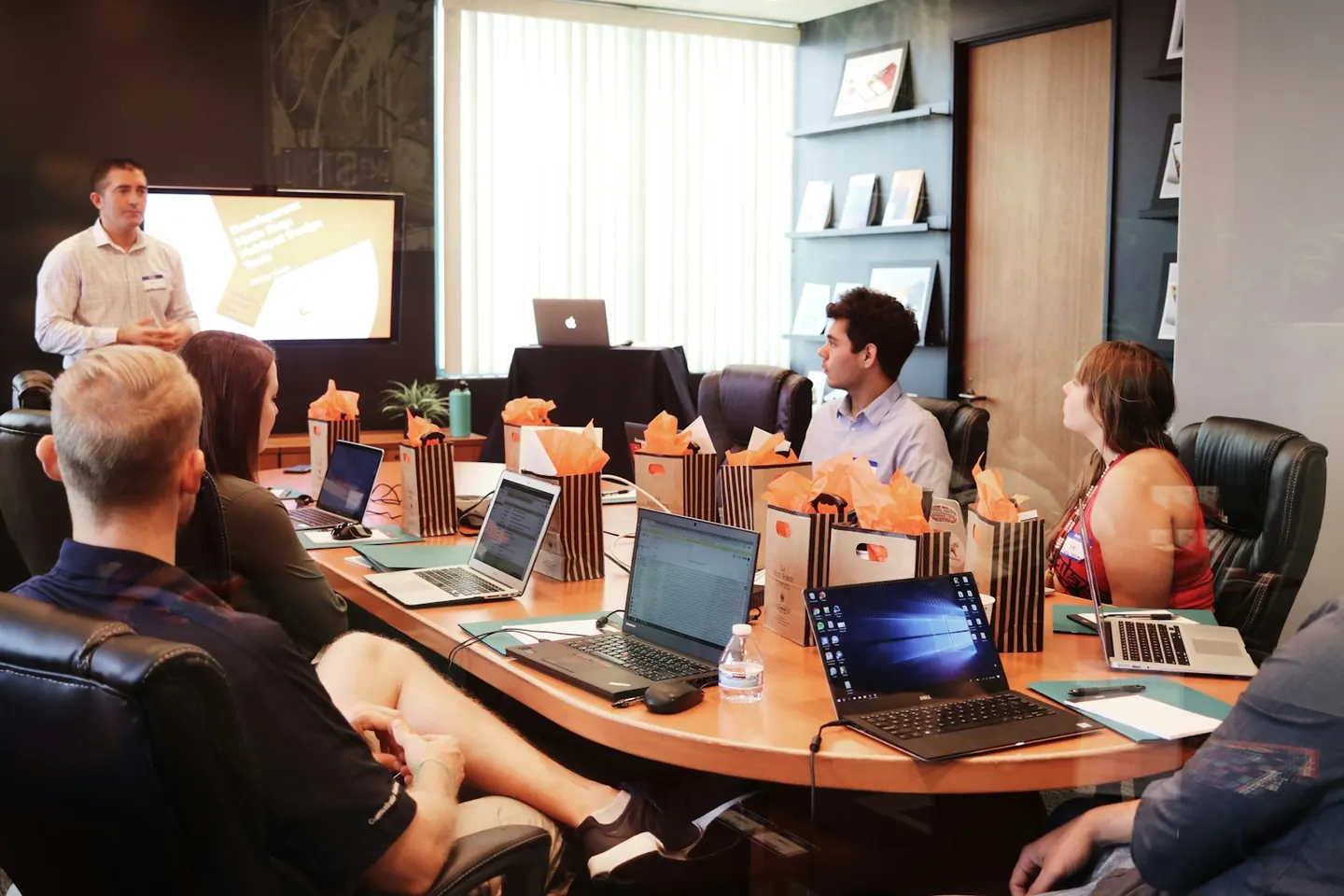
The opportunity is real, but so is the noise. Web Summit says its Lisbon event brings together 70,000-plus attendees from more than 15,000 companies, including 10,000 startups (Web Summit). A founder does not need thousands of conversations. The job is to identify the few people who can teach you, try the product, and introduce the next customer.
Customers 1–10: validate the problem in person
For the first ten customers, optimize for learning speed. Choose a focused event where prospective users share a role, workflow, or regulation. Go as an attendee before paying for a large booth, then book 10–15 short discovery conversations around one hypothesis.
Ask questions that expose current behavior:
- What triggers the problem?
- How is it handled today?
- Who owns the budget and who feels the pain?
- What has already been tried?
- What would need to be true to test a new approach?
Do not turn every conversation into a demo. Listen for repeated phrases, urgent deadlines, workarounds, and evidence that someone has already spent money or time on the problem. End strong conversations with a small next step: a second call with a colleague, a design-partner session, or a paid pilot with a defined outcome.
IDC's 2026 Sponsor Survey of 150 senior marketers found that 53% prioritize qualified lead generation, while more than 90% say events deliver their greatest value in the mid-to-late funnel (IDC, 2025). Even at the earliest stage, progress comes from advancing a relevant conversation, not collecting the most badges.
Customers 11–30: turn learning into a narrow offer
Once the problem repeats, narrow the message. Write a one-sentence offer for one buyer type, one painful use case, and one measurable change. Use the next event to test whether strangers understand that offer without a long founder explanation.
Build a target list before the show and divide it into three groups:
- Design partners who can shape the product and tolerate rough edges
- Ready buyers with an active trigger, budget path, and near-term decision
- Connectors such as consultants, operators, and customers who can make credible introductions
This is also the stage to record qualification consistently. Capture company, role, current workflow, urgency, authority, next step, and the exact words used to describe the problem. The startup founder event playbook shows how to separate customer conversations from investor, partner, and hiring meetings so those goals do not compete for the same hour.
At a startup-heavy show such as TechCrunch Disrupt 2026, the filtering burden is substantial. TechCrunch reported 10,000-plus founders, investors, and technology leaders, 300-plus exhibiting startups, and 250-plus speakers at the 2026 event (TechCrunch, 2026). Scryon's public preview maps 4,376 companies for the conference. Free discovery and ICP scoring can help founders rank that universe; paid research credits add deeper company intelligence for the accounts worth pursuing.
Customers 31–100: build a repeatable event loop
By customer 30, the founder should be converting lessons into a process another teammate can run. Before each event:
- Select a show by ICP density, not fame
- Build a named account list and assign an owner
- Start outreach four to six weeks ahead
- Book anchor meetings before travel
- Prepare one proof point for each priority use case
- Define what qualifies as a next step
During the show, log notes immediately and ask for a calendar commitment when the fit is real. Within 24 hours, send the promised material with a personalized summary. Within seven days, review meetings held, qualified opportunities, pilots proposed, referrals requested, and deals progressed. The broader event-led growth playbook explains how to connect those results across a calendar instead of restarting at every show.
Use simple ratios to find the constraint: target accounts contacted to meetings booked, meetings to qualified next steps, next steps to pilots, and pilots to customers. If meeting volume is weak, fix targeting or outreach. If pilots stall, improve the offer and success criteria. If customers do not refer peers, ask whether the product is producing a specific result worth sharing.
Scale support without blurring the offer
A growing team can still use the self-serve platform for free conference discovery and ICP scoring, then buy research credits when it needs deeper account intelligence. Separately scoped enterprise conference services can support conference selection and booking, meeting preparation, booth or sponsorship negotiation, pre-event marketing warmups, booth design, and representative staffing. Scope and pricing are custom, and these services do not guarantee savings, meetings, media coverage, podcast placements, or ROI.
The first 100 customers are not one milestone reached by one tactic. They are a sequence: learn with the first ten, sharpen the offer through 30, then make the motion repeatable through 100. Events help because they place the market in one room. The advantage belongs to the founder who arrives knowing exactly whom to learn from and what should happen next.
Further reading
- IDC 2026 event strategy survey – lead-generation priorities and funnel value from 150 senior marketers
- Web Summit attendee experience – current attendee, company, and startup scale for the Lisbon event
- TechCrunch Disrupt 2026 overview – founder, exhibitor, and speaker scale from the organizer